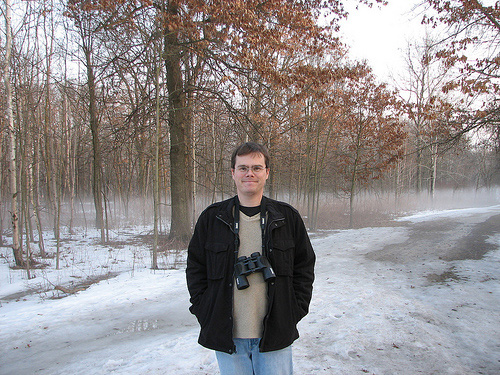
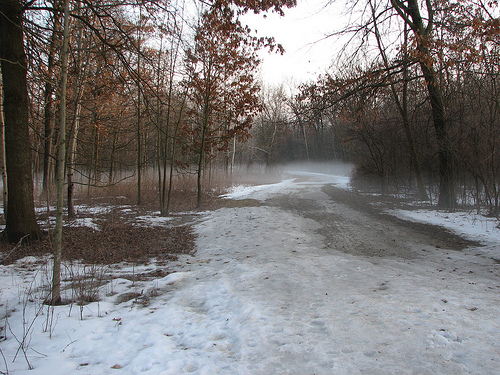
Yesterday we had a late afternoon walk at Grant Woods, a forest preserve just a few minutes from where we live. It was a beautiful sunny afternoon and at 60°F (16°C) it was the first time we didn’t have to wear our winter coats this year!
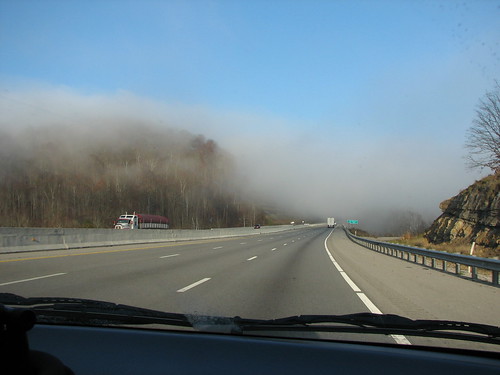
There was still some snow on the ground, which caused an eery low fog to hang around the forest. It also made it very humid, with all that melting snow, and a challenge to walk through all the ice and mud. The bottom of our pants were soaking wet after finishing the 1.8 mile trail.
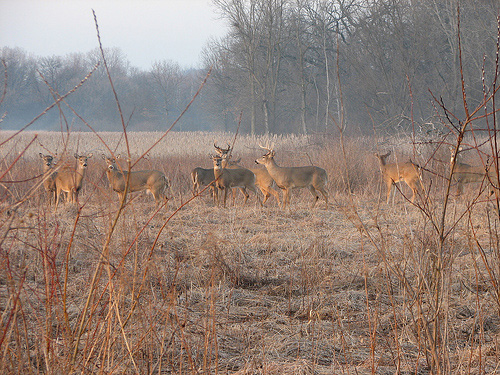
We saw a group of ten deer, which was a nice treat. They would all freeze each time we stopped walking. Look, they’re doing it right now:
Lots of birds that weren’t here a few days ago were suddenly singing all around us. We saw American Robins, Grackles and heard Killdeer too, all birds that just arrived from the warmer south. Hundreds of male Red-winged Blackbirds were singing, which is always a welcome indication of the return of spring. I look forward to spending more time outside in the weeks and months ahead.
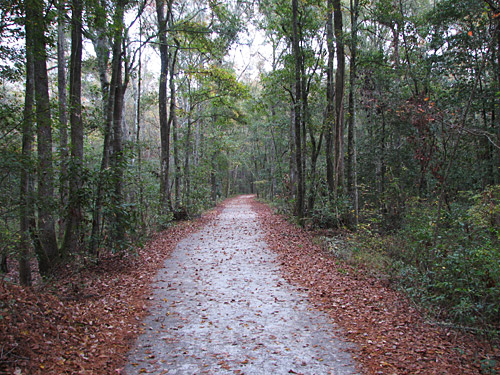
On our drive back from Florida we spent the night at a Days Inn in Walterboro, South Carolina. We learned that just 3 minutes from the hotel and the I-95 is a nature preserve called the Great Swamp Sanctuary. We checked it out the next morning and had a great walk.
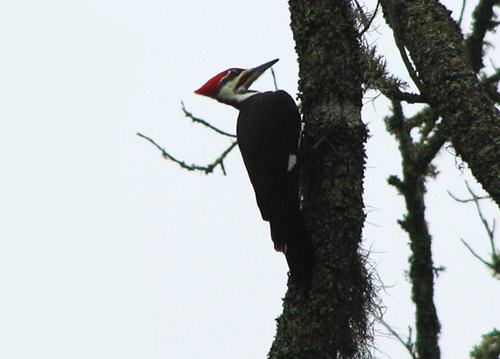
At the end of a long straight trail is a swampy area with lots of bird-filled snags. We saw four different woodpeckers, including several Pileated Woodpeckers (picture below), Carolina Chickadee, Red-shouldered Hawk, Bluebird, Hermit Thrush and several other birds. The longer we stood there looking at the swamp, the more birds flew in from all around us.
Pileated Woodpecker
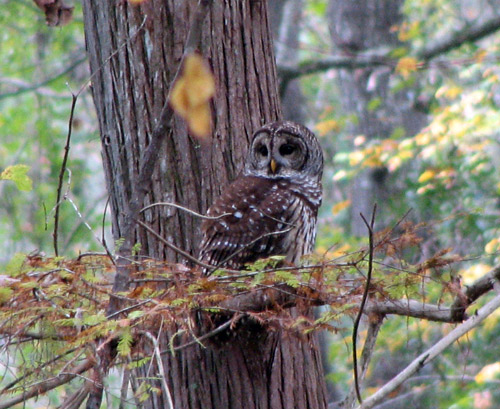
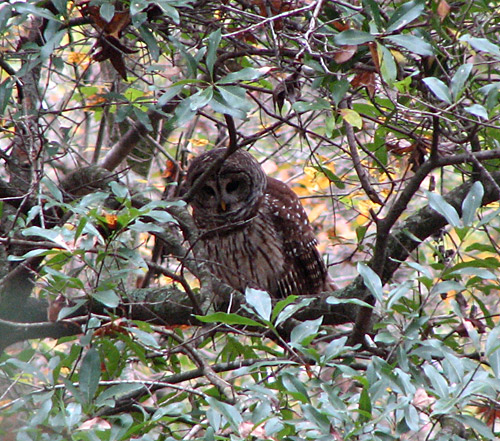
When walking back to the car we saw something fly across the way in front of us and land in a tree right next to the path. It was a Barred Owl … the first Barred Owl we had ever seen in the wild!
We had seen a few Barred Owls this year from Bird Rehabilitation centers, so we recognized it immediately. It’s also Amy’s favorite owl, so it was a thrill to see it in the wild. We watched it for a while. When we walked further and approached it, the owl calmly flew a bit further into the woods and landed on another tree, where we could look at it again. We had seen about 85 bird species on our trip to Florida, but this one was our favorite! What a great sighting.
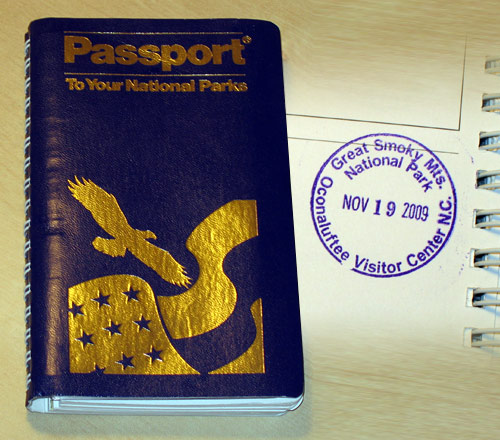
On our drive back from Florida last week we were happily driving through the smoky mountains in North Carolina on Interstate 40 when we saw one of those signs flashing that tell you to listen to an AM frequency for an important traffic message. From the radio we learned that a rock slide about 20 miles in front of us was blocking the highway! Travelers were urged to drive back to Asheville and take Route 26 to Kingsport and then Route 80 to Knoxville. OMG, that’s a 150 mile detour!
Looking at the map we noticed that we could also get off at the next exit and drive through Great Smoky Mountains National Park to get to the 80. That sounded like a lot more fun than 150 miles more highway.
The Great Smoky Mountains get their name from the natural fog that often hangs over the range. The fog is the result of warm humid air from the Gulf of Mexico that cools rapidly in the higher elevations of the Appalachian Mountains.
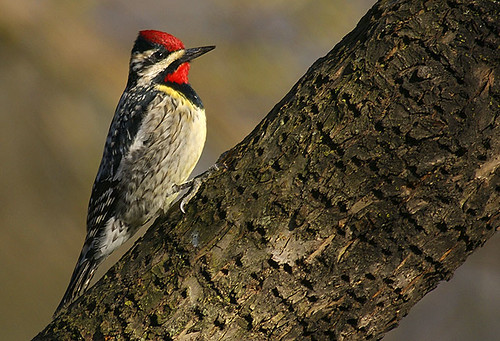
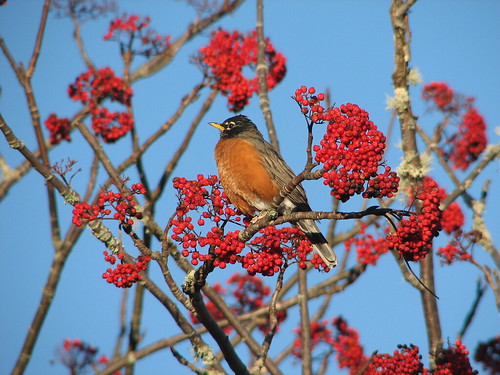
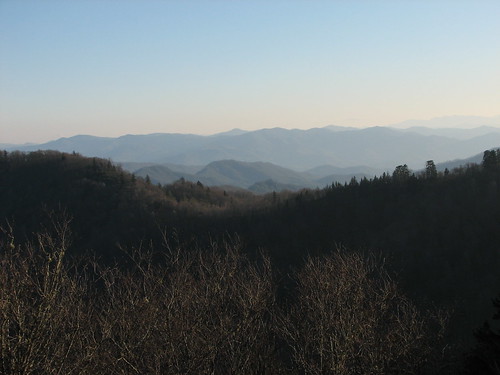
Half-way through the park we stopped at a look-out point on the pass where the Appalachian Trail crosses the road. We had some great views of the smokies and even saw a couple of birds like this American Robin and a Yellow-bellied Sapsucker. We also walked a tiny part of the Appalachian Trail, but only for a few hundred yards because it was getting dark. Maybe once we’ll walk the whole 2,178 miles.
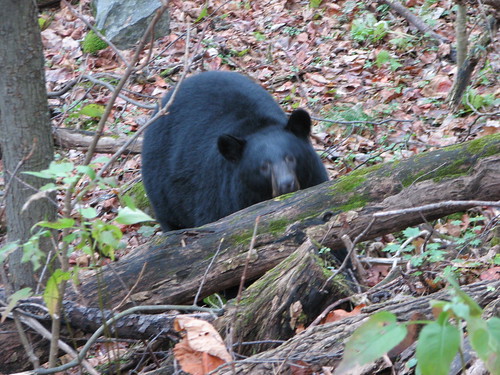
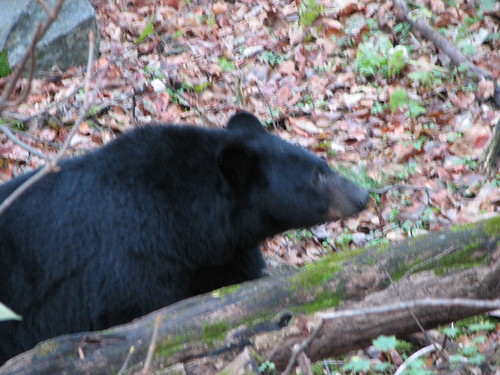
Then, when least expected, it happened. We were driving down the mountain when all of a sudden there were a bunch of cars stopped on the side of a road. About a dozen people were outside their cars looking down at something. We got out of our car too and saw an American Black Bear walking through the forest. Whoa! It was the first wild bear we’d ever seen!
Here’s a neat video that Amy took:
A few miles down the road we encountered another group of people standing on the side of the road. We got out again and saw a second bear! This one was a bit larger and much closer to the road. At first we were looking into the distance and couldn’t find it, but then all of a sudden we noticed it was foraging through the leaves only about 30 feet away from us below the road! The bear only looked up every 30 seconds or so, to make sure we weren’t doing anything stupid, and then went on with his business.
The bears were both so relaxed, we figured they are used to tourists standing nearby … as long as they stay on the road. The first bear was on an inclined piece of land where the road curved. There were cars stopped at the top and we could also see some cars and people below staring at the bear. At one point we noticed that a man from down below had walked toward the bear in the forest and was hiding behind a tree to take pictures. The man was only about 30 feet away! When the man made a noise the bear looked up and she did not like the human in her territory. The man slowly backed up and managed to get back to the car. What an idiot. He must not watch The Colbert Report or he would have known that bears are the #1 Threat to America.
We’ve had a good week for backyard birding. Not only did the White-crowned Sparrows and Dark-eyed Juncos return for the winter, we also had five new song birds! Since we moved to this house in February we’ve been keeping track of all the birds we’ve seen in our backyard. This week we added five new species.
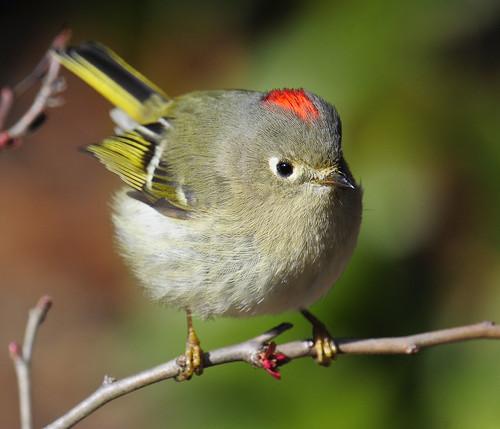
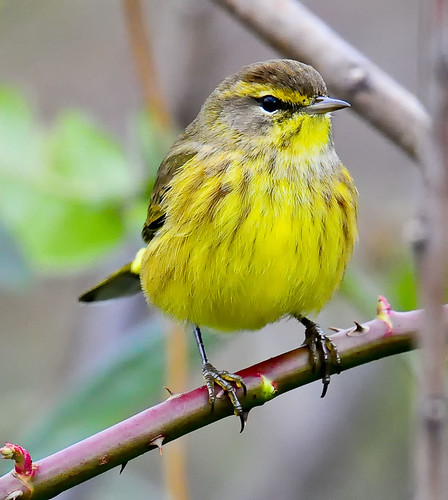
It started last Monday with a Yellow-rumped Warbler that was hanging out in the back and the next day Amy spotted the first Chipping Sparrow at our feeder. On Wednesday we heard a thump against the window and found a little Golden-crowned Kinglet laying on the roof, knocked out. We picked it up and put it in a box in a warm place. A half hour later it started to scratch around in the box so we let it out in the backyard. The kinglet immediately flew to our tallest tree and we watched it for a while as it was flitting around the tree top looking for bugs. Yesterday we saw our first Red-breasted Nuthatch flying back-and-forth between a feeder and a tree and just a few minutes later a Ruby-crowned Kinglet was hopping around the big tree where we had earlier seen the recuperated Golden-crowned.
Wow, that makes 30 different species in our yard so far! I never guessed we’d get so many in our suburban neighborhood! Especially the beautiful warbler and kinglets were a huge surprise. We’ve also been seeing a Cooper’s Hawk almost every day, terrorizing our song birds. Last week we saw him eat a House Sparrow and Amy caught it on video (gruesome!). He likes to sit on the lightest slat of our fence, which is the same color has himself, so he blends right in.
Last Saturday we attended Batfest, a celebration of bats by the Lake County Forest Preserve District held at Lakewood Forest Preserve.
Years ago two large picnic shelters were built at the preserve, which local Little Brown Bats found to be great places to roost. Picnicking humans were not happy to find guano on their picnic tables and dropping into their food, so the district decided to rezone the shelters – one for people and one for the bats. The picnic shelter was modified to be less appealing to bats and the bat shelter was cordoned off so people would not disturb the roosting bats.
The large colony of Little Brown Bats at Lakewood made it a perfect spot for Batfest. There were several tables set up at the preserve with exhibits about the bats of Illinois, making bat houses and other neat bat information. There were also two presentations by bat experts, one of whom brought a couple of her rehabilitation and education bats to show to attendees. During these presentations we learned a lot of neat facts about bats, including:
There are over 1000 species of bat
A bat’s claws are naturally in a curled state. They use their muscles to uncurl the claws in order to grab onto a perch, and then relax to remain clamped on
All bats can see
Vampire bats’ saliva contains a substance which prevents clotting
Vampire bats will share their food with other bats who are hungry and unable to get food for themselves
Bats are an important pollinator for one of the ingredients used to make tequila (when this was mentioned, the crowd murmured ‘thank you, bats’)
After the two informative presentations, darkness began to fall and it was time to look for bats. Everyone gathered around the shelter. It was a huge crowd: bats are popular here in Lake County!
Researchers set up a mist net to capture bats as they left the shelter for the evening. Since the crowd was so large they had live camera which was projected onto a huge screen to capture the action in case a bat was caught. Soon after the first bat was spotted leaving the roost, another bat was caught in the net. She was brought in front of the camera and the brief examination was shown on the screen. It was neat to see the bat expert show features of the animal that helped her determine the age and sex of the bat. The exam reminded me of the bird ringing we observed recently, but the image on the screen reminded me of MST3K:
Can you guess what’s in the bags hanging in this tree?
Those bags have different birds inside them, ready to be banded. There’s Common Yellowthroat, Bluebirds, Song Sparrows and Red-bellied Woodpecker. Doesn’t it look a little surreal?
We visited a group of bird banders last Tuesday morning at Rollins Savanna Forest Preserve and observed their work for a couple of hours. They told us about bird banding and showed us how they handle and band the birds. They had ten mist nets set up that they use to catch birds and every half hour they walked past all the nets to take out the birds that got caught. After carefully removing each bird from the net it was put in a little bag and then hung in this tree until they were ready for banding. It was an interesting experience.
On the drive home from Florida last month, we stopped at the Jackson County Waterfowl Area in Alabama. While we were hoping for birds, we mostly saw lots of skittish turtles who jumped into the water even when we approached from hundreds of feet away.
We also saw this lovely dragonfly.
It’s a Male Widow Skimmer. I wouldn’t have known this if it wasn’t for our trusty brand new field guide I picked up just a few days before: Kaufman Field Guide to Insects of North America. Thank you, field guide.
On Independence Day, we took a little drive and stopped at two state parks: Chain O’ Lakes & Moraine Hills. It was overcast and drizzling at times, but we still had a very nice walk at Chain O’ Lakes, where we had a really good look at a bold Indigo Bunting in a grass field. Then at Moraine Hills we were surprised to find this guy:
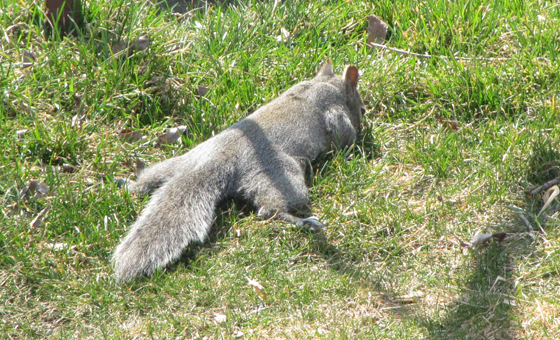
That’s a Thirteen-lined Ground Squirrel! OMG cute! I don’t believe I’ve ever seen one in Illinois before and it was a life mammal for Arthur.
Today we visited the Fermi National Accelerator Laboratory (Fermilab). Besides being home to the world’s largest particle accelerator currently in use (LHC is out of commission until at least this fall), Fermilab maintains much of their 6800 acre site with a variety of natural habitats for wildlife. This includes restored grassland prairie – once a major habitat across much of Illinois and the midwest, and former home to tens of millions of American Bison. Today, Fermilab is home to a small herd of bison.
Today over 70% of extant American Bison have been raised for human consumption. Large herds of free roaming wild bison can only be found in a few protected areas in North America, including Yellowstone National Park and Alberta’s Elk Island.
Five bison were brought to Fermilab by the first director, Robert Wilson, in 1969. In 1971 the herd increased by 21; today’s herd at the lab are descendants of those first 26 animals. More »
We moved here in early February 2009 and our first bird to visit our feeders was an American Goldfinch on February 22nd. Today, just over 3 months later, we saw our 18th species: a Northern Flicker! So far we’d only seen these beautiful large woodpeckers in woods and nature reserves; it was the last bird we’d expected to see in our suburban backyard! She was sitting on the ground under our feeders, probably eating the ants that we’ve been seeing there since we put up a bowl of grape jelly for our Baltimore Orioles. She was only there for a few minutes and this was the best picture I could get: